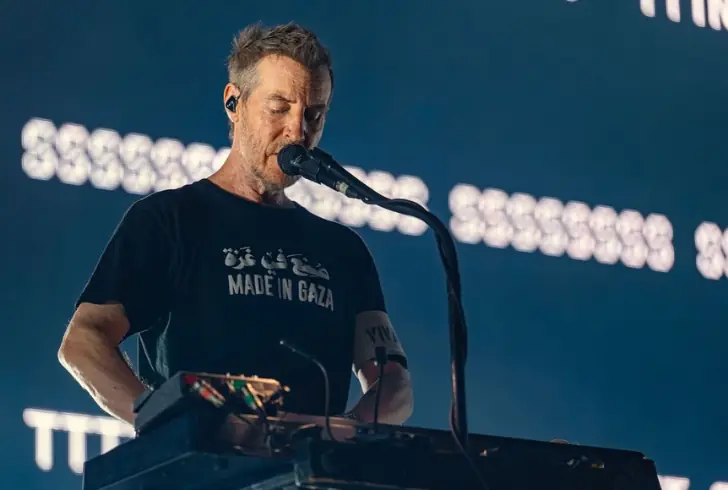
Spotify has faced fresh controversy after British group Massive Attack confirmed they requested the removal of their entire catalogue from the platform. The band’s decision comes in direct response to Spotify founder Daniel Ek’s €600 million investment in Helsing, a European defense company specializing in military AI.
Helsing develops software that analyzes data from sensors and weapons systems to guide battlefield strategies. The firm also produces military drones such as the HX-2. Ek, through his venture capital company Prima Materia, not only funded the project but also serves as Helsing’s chairman, intensifying the debate over his ties to military technology.
Linking Music and Morality
The announcement coincided with the launch of ‘No Music for Genocide,’ a campaign backed by over 400 musicians and record labels. Participants pledged to block their music from streaming in Israel in protest of ongoing military actions.
Massive Attack made clear their request to pull from Spotify was a separate but equally urgent action. In their statement, they argued that artists should not be forced into a position where streaming revenue indirectly funds weapons development.
They pointed to the example of boycotts during apartheid-era South Africa, stressing that music had played a critical role in supporting justice. Their statement read in part:
“When the hard-earned money of fans and the creative work of musicians end up supporting lethal, dystopian technologies, the ethical line has been crossed. Enough is more than enough.”
The group also described the removal as necessary because the pressure on artists is not just financial but also moral.
Spotify and Helsing Respond
Spotify quickly distanced itself from Helsing, saying the two companies are “completely separate.” The company emphasized that Helsing’s projects focus solely on European defense, particularly support for Ukraine against Russian aggression.
Helsing issued a similar clarification, rejecting claims of involvement in other conflicts. A spokesperson stated:
“Our technology is deployed in Europe for deterrence and defense. It has not been used in Gaza.”
Artists Uniting Against Spotify
Massive Attack now joins a growing list of acts boycotting Spotify over Daniel’s defense investments. The roster includes Australian rockers King Gizzard and the Lizard Wizard, post-rock pioneers Godspeed You! Black Emperor, indie favorites Deerhoof, and Manchester band Wu Lyf.
Several of these groups have since shifted their music libraries to Bandcamp. King Gizzard, for instance, uploaded 27 albums under a “pay what you want” model, which immediately dominated the platform’s top chart spots. Massive Attack, however, does not have this option due to their major-label affiliation.
No Music for Genocide Campaign
The wider ‘No Music for Genocide’ campaign has also attracted names such as Rina Sawayama, Amyl and the Sniffers, Jockstrap, Erika de Casier, and Yaeji. Each artist has taken measures to restrict or remove their music from Israeli streaming services.
Massive Attack highlighted the importance of cultural boycotts in their social media posts, drawing parallels with anti-apartheid movements of the past. Their message urged musicians to redirect their grief and anger into coordinated action that could create tangible political pressure.

Standing Up Against Censorship
The band has long positioned itself as politically outspoken. Alongside Brian Eno, Fontaines DC, and Kneecap, they helped form a syndicate protecting artists from legal intimidation when speaking out on Palestine.
The initiative emerged after groups like UK Lawyers for Israel attempted to silence musicians through police complaints and legal threats. Massive Attack explained that the collective exists to ensure performers can express opposition to human rights abuses without fear of career destruction.
They told The Guardian:
“This action shows solidarity with artists who live under constant pressure to stay silent. Many face aggressive legal tactics designed to terrify them and their teams into compliance. The intent is obvious—to stop them from speaking.”
A Call to Collective Action
The band’s move is more than a catalog withdrawal; it signals growing unrest among artists over the ethics of music streaming platforms. While Spotify dominates as a hub for listeners, its leadership’s investment choices raise questions about whether cultural industries should remain financially linked to weapons development.
Massive Attack’s decision reflects a broader cultural moment: musicians increasingly see their platforms not only as spaces for art but also as vehicles for activism. Although the choice may limit their streaming reach, it underscores a deeper principle—music carries power beyond entertainment, confronting systems, drawing attention to injustice, and influencing public conscience.
What began as isolated boycotts now shows signs of becoming an organized movement, emphasizing that the music industry cannot ignore ethical responsibility.